Yesterday, my Girlfriend and I made a great leap through time. First watching the 1948 romantic musical called “The Pirate” (read my toughts on that here I suppose). My girlfriend proposed that since we just watched a romantic comedy from the ’40s, we should watch a very recent one as well in order to see the difference between them. And what a contrast it was.
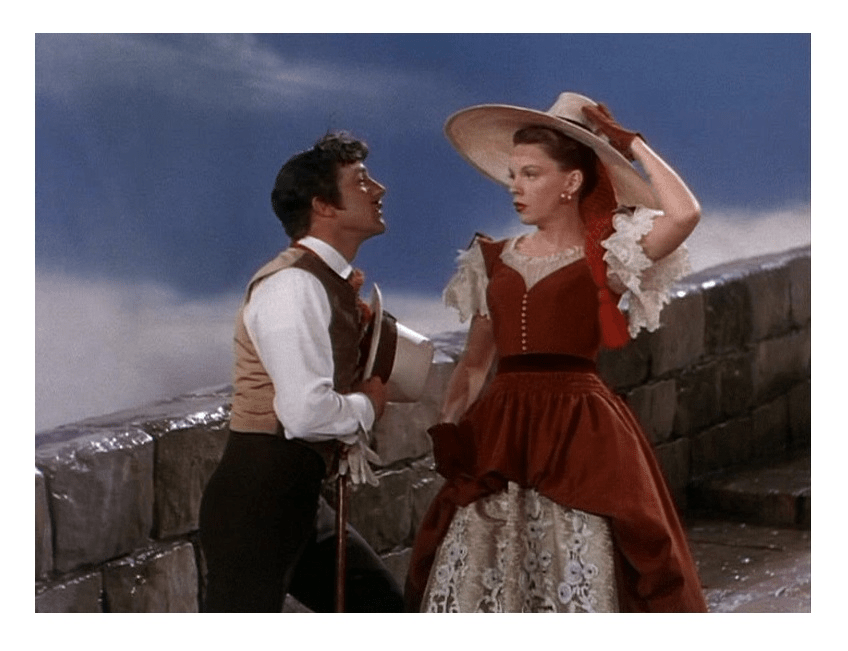
“The Pirate” is a candy-coloured 40s hollywood musical where pretty heterosexuals sing wistfully about love and where creepy, lecherous behaviour is painfully shown in the same candy-coloured daylight. Nowadays, it is in poor taste. But if you ask me, there was something lost in romantic and comedic films over the years. A respect for the craft of acting on a stage. A manic sense of energy in a time where there was a certain unreflected nature about romantic expression. On the one hand, I cringe into the couch whenever a male lead in one of these musicals doesn’t listen to the repeated emphatic protesting of his object of affection (and worst of all: being proven right in the end). But on the other, I wish there were still films where people sang about wanting to fly to a paper moon or some shit. A film that looks like how it feels to be in love.
Materialists can barely be called a comedy in the sense stated above. It has the skeleton of a romcom, but its insides are desolate from its naïve joys and satirical edge. It is certainly a commentairy on our times, but it has different methods and different aims. Most negative reviews on this film expected a comedy, and in terms of that it is dissappointing for me as well. I long for the day where we can make films where we find the actual joy of love again. In films of the 2020’s, it will lay buried beneath tens of layers of self-awareness.
I should dislike this film. I dislike films that over-explain themselves as well as films that wallow in self-awareness about their own existence. But for once I found it refreshing.
Much with that has to do with its meditative tone and empathetic approach. Most of the characters here have sympathetic qualities and motivations, which is portrayed side-by-side with their randomn outbursts of insecurity and entitlement. As a consequence, there is no character that feels like the “truth-teller” here, the one who sees through all and can end this hellscape that we call modern dating.
The film presents two sides on love: A more romantic vision of love: The unseen force that makes us wish, hope, care and persist, but whose presence is immaterial and has to be perpetuated by fate. And the modern ‘box-ticking’ sense of love. Love as a felific calculus on the table that our sadism allows us to submit others to and our deepest fears submit ourselves too. But also a pragmatic tool that occasionally makes a frightening ammount of sense, especially once you’ve had the life experience that some divisions are more difficult to overcome than idealistic love may have hoped.
“Materialists” is a film that will pick the side of the former vision of love. But like a proper Nietzschean approach1, it will not just satirize the other side. It wants to understand it, find the human root beneath that also makes it an expression of life. And that root is the risk of love. The knowledge that after every romantic venture, there will be a couple of years chipped of your lifespan and a couple of dreams chipped away from your soul. When you stand on some pavement on a dull grey night with the voice in your head that says: I can’t take another failure, next time has to be for real.
Or more pressingly, the actual danger of intimate venture. It is clear that some people who play the checkbox game do so with an uncanny predatory intent. With the idea that the human is nothing but a set of deconstructible flesh with this cup size, that political opinion and just low enough self respect not to protest against advances. The kind of guy that watches “the Pirate” and thinks that persistence and deceit are the pavement of the road of romance.
And so we create our little checkbox list to protect ourselves from heartbreak and danger. Sure, it is also used vindictively. We are all hopeless romantics untill the day of rejection, when we spit venom about their size, weight, income, warts and all. And never forget that its a gun on the table that another can pick up just as easily and point at you, or so you fear when you point it at yourself in the depth of night.
To look at this view of love in the way materialists does indeed dull the opportunity for a more funny satirical tone. But that loss for once has a gain in my opinion. And all of this is helped by giving its cast of characters multiple opportunities to be decent people and not just ideological hand puppets. It would have been easy to make Pedro Pascal’s character superficial and arrogant, but the film relents on this front, a practice of what you preach.
So, The Pirate presents love as simple and self-affirmative. But it is also self-defeating, it is stuck in the 1940s patriarchal cruelty. Materialists by contrast has a more complete picture, and argues for love with all the uncomfortable elements in frame.
Well done.
But next time.
I don’t want to hear about it.
I want to feel it.
Baby.
https://www.youtube.com/watch?v=oVZH3EzVZtk
Notes:
- No I will not elaborate on that get your own degree. ↩︎
 Sleeptalking